


Empathy Starts Early: Teaching Kindness to Kids
- Sep 15, 2025
- 4 min read
Updated: Sep 17, 2025
Empathy is a powerful human trait. It enables us to connect with others, understand their emotions, and respond with kindness. Instilling empathy in young children lays the groundwork for a compassionate society. Although it may seem challenging to convey such profound ideas to young children, but it's not impossible - they are naturally inclined to connect with others. With the right guidance, parents and caregivers can nurture this ability, helping toddlers develop empathy and kindness from a young age.

Understanding Empathy in Toddlers
Empathy is the ability to recognize and share the feelings of others. For toddlers, this might look like showing concern when a friend is upset or sharing toys during playtime. Research shows that by age 2, nearly 60% of toddlers can express empathy through simple acts like comforting others.
Children are deeply observant and learn by watching those around them. When parents demonstrate kindness—like helping a neighbor or being patient in line—children are more likely to imitate these behaviors. Consider this: a study found that 75% of children who observed empathetic behavior from adults displayed similar actions in their peer interactions. When adults acknowledge and encourage empathetic actions, such as saying, "That was kind when you shared your toy," they help toddlers understand the importance of compassion and kindness.
And here are some ways you can instill empathy in your little one:
1) The Role of Modeling Behavior
Modeling behavior is one of the best ways to teach empathy. Children learn by watching the actions of adults. When parents and caregivers show kindness and understanding, toddlers are more likely to adopt similar behaviors.
For example, if a parent agrees to picking up a neighbor's kid from the same school or shows concern when a neighbor is in need, the child will internalize these actions. And the gesture of appreciation from the receiver can help reinforce the value of empathy in a child's mind.
2) The Role of Play in Teaching Kindness
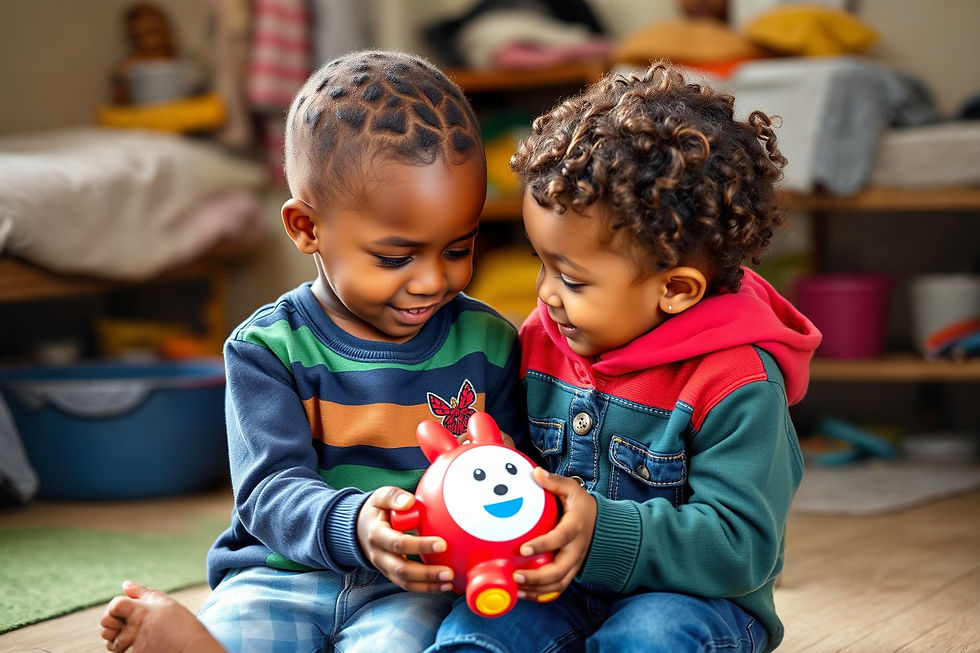
Play is essential for toddlers' development. It is through play that they learn social skills like sharing, cooperation, and empathy. Engaging in activities that require teamwork helps children understand the significance of kindness.
For example, playing games that encourage teamwork can teach toddlers how to collaborate and support one another. Simple activities like building a tower with blocks or playing pretend can reinforce sharing and taking turns. When children play together, they practice negotiating and working through conflicts; which actually, are vital skills for building empathy.
3) Encouraging Emotional Expression
To nurture empathy, it is important to encourage toddlers to express their emotions. When children can articulate how they feel, they become better equipped to understand the emotions of others.
Creating a safe space for emotional expression is essential. Validating your child's feelings with phrases like "It's okay to feel sad" or "I see you're frustrated" can help toddlers name their emotions. Research indicates that children who can recognize their emotions are 40% more likely to sympathize with others.
4) Teaching Through Real-Life Situations
Everyday situations present excellent chances to teach empathy. If a toddler sees a friend fall, it's a perfect moment to discuss feelings and appropriate responses.
For instance, when a child observes a peer crying, parents can guide them to ask if the friend is okay or to offer a hug. These real-life scenarios help our little humans practice empathy practically. According to studies, children who engage with peers in distress show a 50% increase in empathetic behaviors when prompted positively by adults.
Furthermore, talking to toddlers about age-appropriate real-life events can clarify their understanding of empathy. Talking about how others might feel in different circumstances helps children develop a more extensive view of the world.
5) Reinforcing Positive Behavior
Using positive reinforcement is crucial when teaching empathy. Celebrating kind acts helps toddlers understand the value of their actions. When a child helps someone, simple affirmations like "I love how you shared your toy" or "That was very kind to help your friend" reinforces their willingness to be kind. When toddlers show empathetic behavior, praising them can motivate continued kindness.
This positive feedback helps toddlers connect kind actions with positive feelings, encouraging them to repeat these behaviors.
6) The Power of Kindness Rituals
Establishing kindness rituals can reinforce empathy's importance in daily life. Simple practices like saying "thank you" or "please" can instill respect and consideration for others. Parents can create daily opportunities for kindness, integrating them into regular activities. Simple acts like sharing a snack or caring for a sick pet can teach toddlers the significance of being considerate.
Additionally, involving toddlers in community service activities, such as donating toys or helping a neighbor, provides practical experiences that highlight the significance of kindness and sense of belonging.
7) Encouraging Peer Relationships
Building friendships is vital for a toddler's social growth. Encouraging positive interactions helps children practice empathy and kindness in a supportive setting.
Playdates and group activities allow toddlers to learn how to navigate social dynamics. Parents can help guide their children in sharing, taking turns, and resolving conflicts—key skills for developing empathy.
Moreover, recognizing and appreciating differences among peers fosters an inclusive mindset. Discussing diversity and celebrating unique qualities can help children understand that everyone has various feelings and experiences, promoting broader empathy.
Conclusion:
In a disconnected world, nurturing empathy in our youngest members is a step toward creating a kinder, more compassionate future. By modeling empathetic behavior at an early age, parents and caregivers can nurture these essential qualities.
As children learn to understand and share others' emotions, they evolve into more compassionate individuals. The kindness they learn in their early years can lead to a more empathetic society for future generations.
Embrace the opportunity to teach toddlers the importance of kindness, one small act at a time!


Comments